
Since Halloween is just around the corner, we thought we’d share one of the lesser known, yet more macabre creatures to be found in Hawai‘i. Full disclosure: we don’t have any photos of these little guys, but you can see them on the Wekiu Bugs research page for the University of Hawaii’s Insect and Systematics and Biodiversity program. Now, on to the creepy crawlies.
Ever heard of the Wekiu Bug? probably not, because we hadn’t heard of it until a few years ago. This lil guy lives at 13,000 feet on Mauna Kea, and it survives entirely on the dead.
Before you get the creeps just know that the wekiu bug is smaller than a grain of rice and harmless to humans. Spend five minutes learning what it actually does up there in the cold, though, and you will never look at a snowbank on Mauna Kea the same way again.
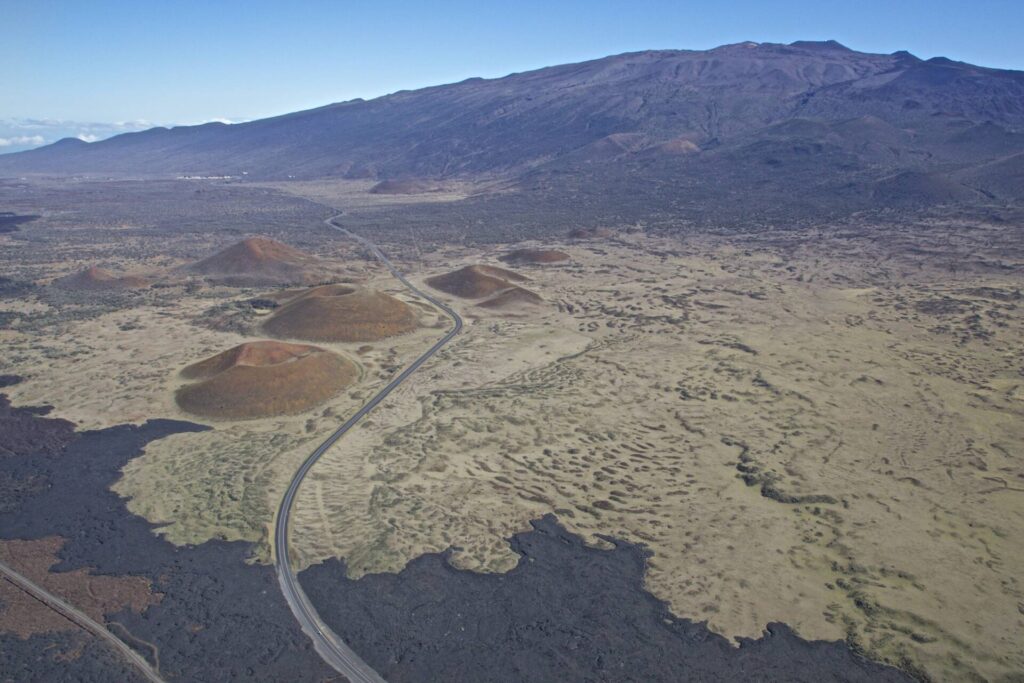
A graveyard at 13,000 feet
The summit of Mauna Kea is one of the most hostile environments in Hawaii. Temperatures swing from freezing to scorching in a single day, almost nothing grows, and the wind never stops. That wind is the whole reason the wekiu bug exists at all, because it carries a constant supply of insects up from the lower slopes and drops them, dying or already dead, onto the summit’s cinder cones.
Most of those insects never had a chance. The cold up there kills them fast, sometimes mid-flight, and they pile up on the snowpack in numbers that researchers have described as blanketing the surface. That snow acts like a natural morgue, holding the bodies fresh and cold until something comes along to feed.
That something (you guessed it) is the wekiu bug.
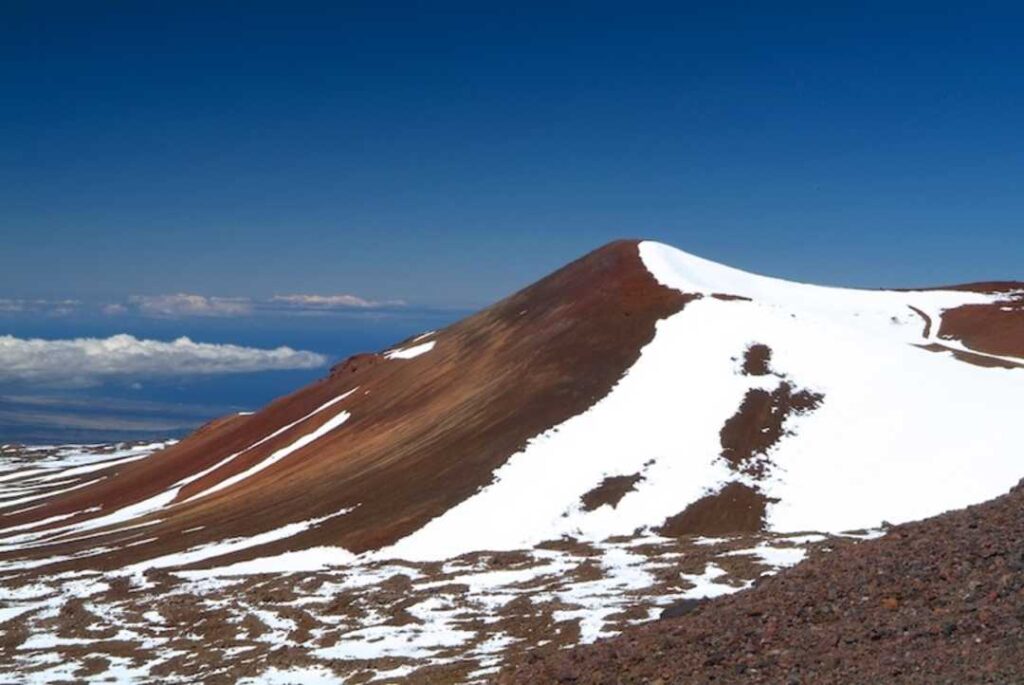
An eater of the dead, built for the job
Nearly every other bug in its family survives on seeds. The wekiu bug broke from that path entirely and became a scavenger-predator, feeding almost exclusively on the corpses stranded at the summit. When a wekiu bug gorges on a fresh kill, its abdomen visibly swells, a trait scientists call physogastric, and researchers monitoring the population have found bugs so distended after a feeding they could barely move (sounds like us after a luau buffet).
Picture that for a second: a creature the size of a rice grain, sitting alone on a frozen lava field, bloated from a meal made of the dead things the wind delivered to its door.
Not the only thing hunting up there
The wekiu bug is not even the top of the food chain on that mountain. Wolf spiders share the same summit, and researchers checking pitfall traps have found direct evidence of these spiders eating wekiu bugs, sometimes leaving nothing behind but spider legs after another spider came along and finished off the first one. Up there, everything eats something, and almost everything eventually gets eaten.
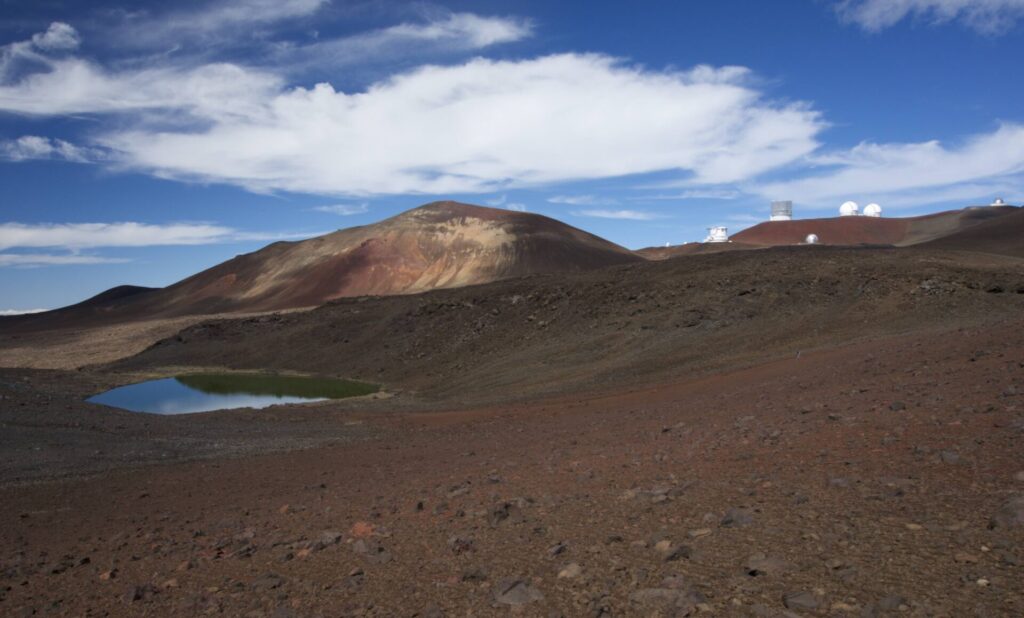
So is the Wekiu Bug actually a cannibal?
Um…no. Not really at all. But it sounds better doesn’t it? “Cannibal” technically means eating your own species, and the wekiu bug’s confirmed diet is other kinds of insects, not other wekiu bugs. Calling it a cannibal is a stretch of the word, even if it earns the reputation in spirit.
What it actually is, though, might be creepier: an insect that will eat almost anything unlucky enough to land near it, regardless of species, the moment the cold takes the fight out of its prey. It does not hunt so much as wait, letting the mountain do the killing and simply showing up for the meal. Entomologists who have kept them in lab colonies feed them fruit flies precisely because the wekiu bug is not a picky eater in the slightest, and unlimited prey is the only thing that keeps a colony alive.
An endangered monster
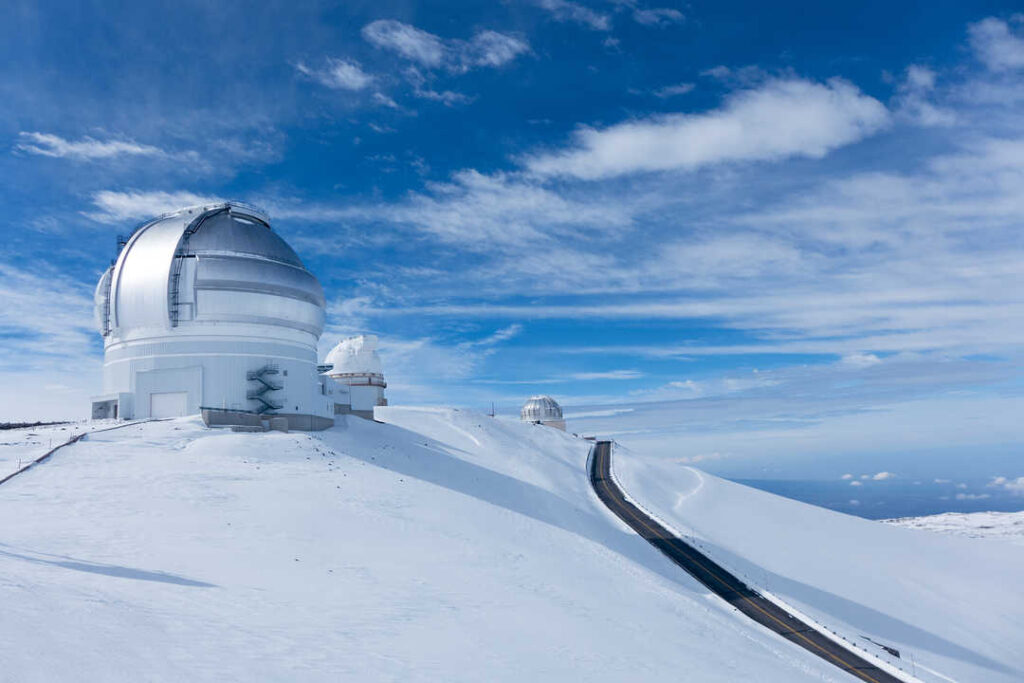
For all the horror movie framing, the wekiu bug is in real trouble. It exists nowhere else on Earth, its entire known range sits within a few cinder cones near the Mauna Kea summit, and habitat disturbance from tourism and construction on the mountain has put it forward as a candidate for federal endangered species protection. Conservation teams monitor its numbers every year, and a bug most visitors will never see or think about turns out to be one of the rarest and strangest success stories in Hawaiian entomology.
Next time you’re up on Mauna Kea for sunset or stargazing, take a look at the snow near the cinder cones. Somewhere in it, something small is probably feeding.
0 Comments