
It’s something that seems to catch both first-time and repeat visitors to Hawai‘i by surprise—winter storms. Since winter is one of the most popular times of year to visit the Hawaiian Islands, bad weather can feel especially disruptive to those looking to escape the ice, snow and cold on the continent for a few precious days. Despite the outward appearance of Hawai‘i having an endless summer, we do have seasonality. And it’s something to keep in mind when you’re planning your trip.
Storms in Hawaii
A lot of attention goes to the summertime storms in the tropics. Hurricane season typically begins in June and ends in November. While hurricanes are nothing to take lightly, Hawai‘i has historically had relatively few direct hits. (That doesn’t mean we don’t feel the effects—these tropical cyclones are so massive that even when several hundred miles away, Hawai‘i can still get slammed with winds and rain.) Winter storms, often in the form of what is called a “Kona low”, are far more frequent visitors to the islands.
What the heck is a Kona Low?
(Hint: It’s not the feeling you get after seeing your resort bill when at the end of your Big Island trip.)
This is the regional term for storms that develop over the Pacific Ocean west to northwest of the Hawaiian Islands, usually from around November through May. Around 80% of the year, the wind patterns (and thus the weather) in Hawaii come mainly from the northeast. These are known as the Trade Winds and why the northeast sections of all the islands are called the “Windward” side and are the most lush with vegetation and home to so many waterfalls.
When a low-pressure system forms west the islands, it can disrupt the typical Trade Wind pattern. Winds will shift south to south west, and we call this Kona (as in the leeward or western) Winds. If it’s a Kona Wind day we mostly experience muggy, humid conditions and the chance of more rain on the usually-dry leeward sides of the island, as well as “vog” (volcanic smog) when the Big Island’s volcano is erupting.
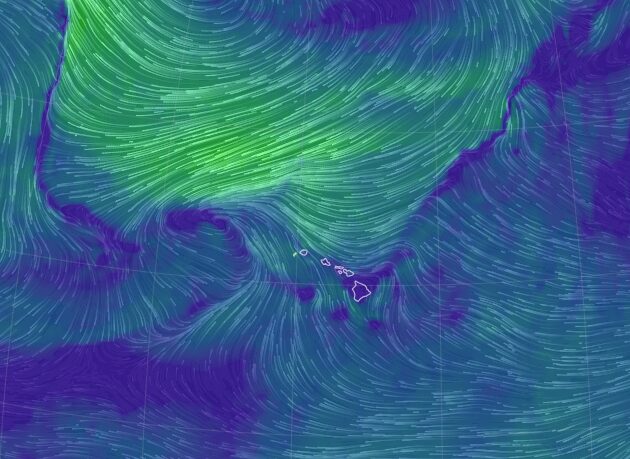
Image courtesy of nullschool earth website
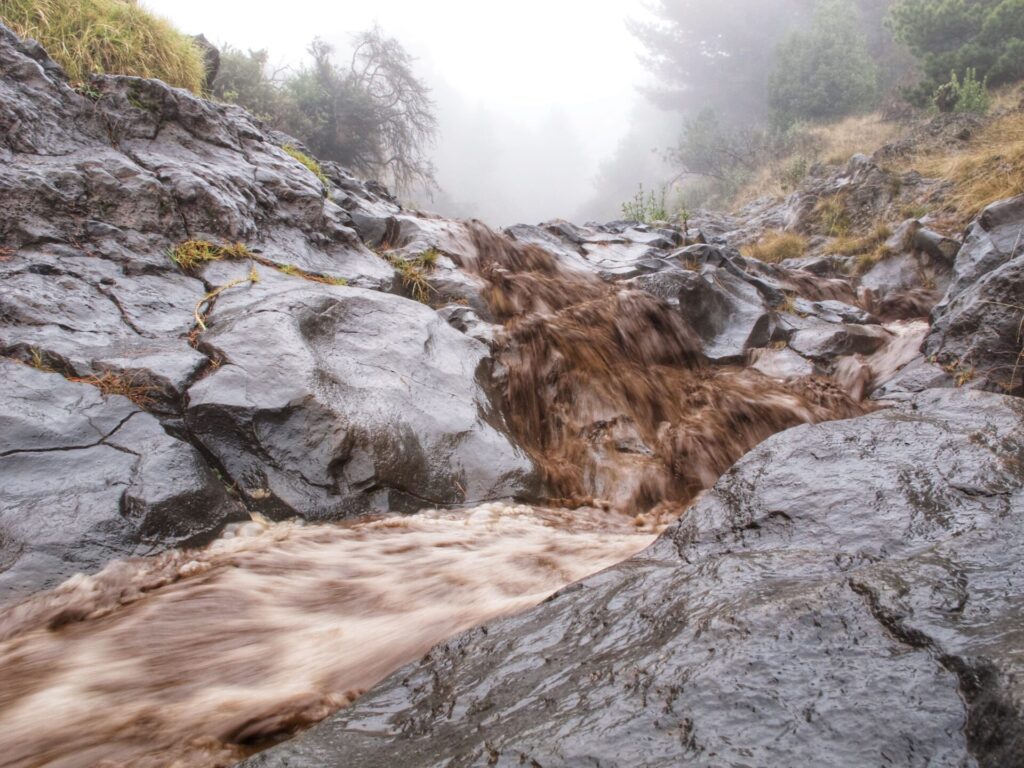
If the storm is large enough, all the moisture-filled air that has formed over the ocean gets pulled across the islands. The islands are so massive and have such high elevation that these large storms essentially get caught on the islands, stall and drop way more rain in places that hardly get any precipitation the rest of the year. The resultant floods bring mud, sediment and debris downhill to the ocean in a process akin to what is called “gully washers” in the American West.
Since these storms stall out over the islands, it can lead to days and even weeks of rainy conditions. (When I first moved to Kaua‘i in the early ’90s, it rained for almost 40 days straight!) The results can be devastating for roads and other infrastructure, and especially so for any buildings near drainages or in the water’s path as it nears the ocean. The water saturated ground can make even giant trees topple over when just a little wind is added to the mix. Power outages can be persistent during this storms, further complicating plans and limiting options.
March of 2026 has been a stark reminder of how damaging these storms can be, with every island experiencing some degree of flooding and destruction. Our hearts go out to those families and communities impacted by the storm and floods.
How to Plan Your Trip Around Winter Storms
Well, there’s good news and bad news with planning for rainy days in Hawai‘i.
First, the bad: You can’t plan around these storms. Most visitors to Hawai‘i plan their trips months, if not years in advance and there’s just no predicting what the weather will be that far in the future. If your trip in is the wintertime, just know that it’s the rainy season for Hawai‘i.
If you find yourself on the islands during one of these storms, your best bet is to not go out and explore the island—stay put and follow instructions from emergency officials. Resorts are well equipped to help visitors stay safe and informed.
The good news: These big storms are infrequent enough that the odds are you won’t experience it during your vacation. Even if it does turn out to be one of the rainier times when you visit, if you’re flexible in your plans and expectations, you can still have the trip of a lifetime. Most activity companies have good policies for cancellations and refunds due to weather. (Though be sure to pay close attention to fine print, and call the companies to clarify anything you’re unsure of and if conditions are looking stormy as your travel days get closer).
The rainy season and these storms are an important part of what makes Hawai‘i the tropical paradise it is—you might even find sipping a mai tai while watching the rain over the ocean to be one of your favorite memories. (Though individual results may vary.)
Important Resources and Links
Staying informed is an important part of travel. Below are some important links to finding current weather conditions, road closures and emergency announcements. Consider subscribing to their alerts during your visit to help stay up to date on conditions and warnings.
National and State Agencies
National Weather Service Forecast Office for Hawaii
Hawaii Emergency Management Agency
Hawaii Department of Transportation Weather Alerts
Kauai County Agencies
Kauai Emergency Management Agency
Oahu/City and County of Honolulu
Honolulu Department of Emergency Management
Maui County Agencies
Maui Emergency Management Agency
0 Comments